
localized date
Current Time


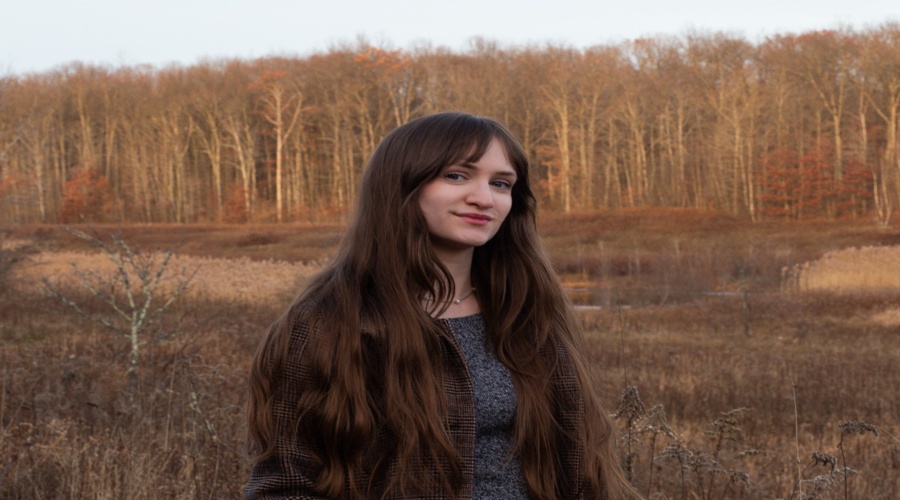
Emilia Doda didn’t set out to map the data center boom.
But after reading about a data center proposed across from her childhood home near Scranton, she decided to build a public map showing where data centers are planned in Pennsylvania — a tool for residents to learn more. Now, she hopes to make the tool to be open-sourced so others can replicate it across the country.
“I thought it was so valuable that people, just general communities, had this information,” said Doda, who now lives in Silicon Valley.
She had questions about the data centers coming to Pennsylvania and wanted to create a clearinghouse for the information she gathered.
A data center is a warehouse-like building filled with computers that store and process massive amounts of digital information, supporting services such as cloud storage, streaming, and artificial intelligence.
Doda, a graduate of the University of Southern California in physics/computer science, began the project while living in Silicon Valley. She’s continued updating it while looking for a job in the tech industry and working on video game programming, photography and freelance website development.
Anthony Pipa, senior fellow at the Brookings Institution, said tools such as a citizen-driven map help people better understand what is happening in their communities.
The way Pipa sees it, more information, “empowers local people to be part of this decision-making process.”
Since launching the map in August, Doda has received questions and tips. She has also attracted attention on social media and news outlets.
But until now, she has not discussed her role in creating the map. Doda said she was concerned about being perceived as an authority figure on data centers, which often process data for artificial intelligence.
“I think AI is a good tool,” she said. But she questions whether Pennsylvanians will be the primary beneficiaries of the technology.
“We all say that Scranton, the area, is 30 years behind technologically,” she said.
Doda internalized this when she moved to California to start college in 2019.
The day she arrived at the University of Southern California in Los Angeles, she took a taxi instead of an Uber from the airport, which she said her classmates questioned. But Doda had never taken an Uber.
“I realized, this is literally a whole new world,” she said.
Now, living in Silicon Valley, Doda said some of her friends work for the biggest tech and artificial intelligence companies in the world but aren’t well versed on data centers.
And although Doda’s mapping did not reveal an overlap of data centers and former coal mines, Pipa sees the relevance of the region’s industrial history.
“To build data centers, you need significant outside investment,” Pipa said. Investors use local land, water, and electricity, which is “not dissimilar to energy extraction.”
Hannah Frances Johansson is a reporter for the Pittsburgh Media Partnership newsroom. She holds a master's degree from the UC Berkeley Graduate School of Journalism. She is a 2025 recipient of the Overseas Press Club Scholar Award and a former 11th Hour Food and Farming Fellow. Her reporting has appeared on CNN, Pittsburgh's Public Source, and Michigan Public Radio, among others. She resides in the city’s North Side. Reach her at hannah.johansson@pointpark.edu





.jpg)