
localized date
Current Time


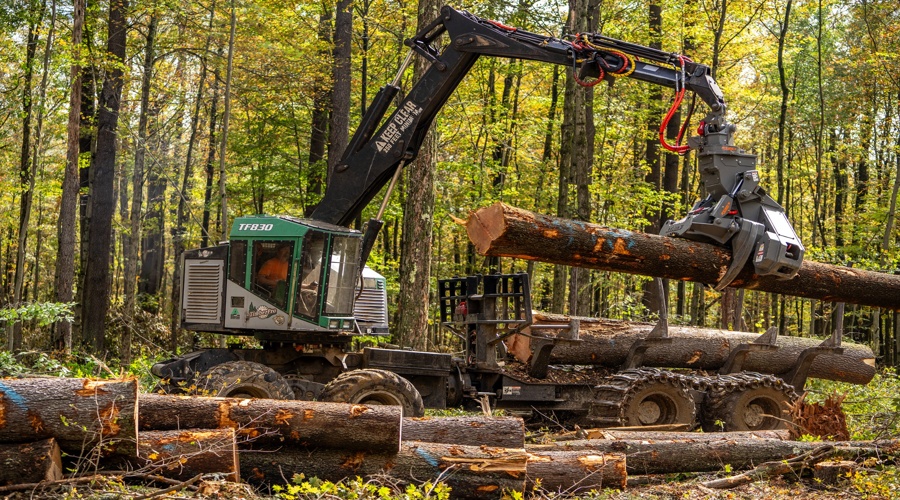
ELK COUNTY, Pa. - In Elk County, a behemoth is performing surgery on a forest.
Its yellow head — taller than a human and equipped with 18 “teeth” — cuts through the base of trees and gently lays logs down in a pile. The rest of its body would blend into lush green foliage in spring but stands out against autumn leaves in Elk State Forest.
The operation is overseen by John Murdock, a Pennsylvania State University-trained forester and owner of Murdock Forest Management, a logging company based in Elk County.
Inside, one of Murdock’s employees operates the machine, dubbed a “feller buncher.” Just two weeks earlier, the machine was making its way through the Allegheny National Forest, logging beech, black birch, and yellow birch trees.
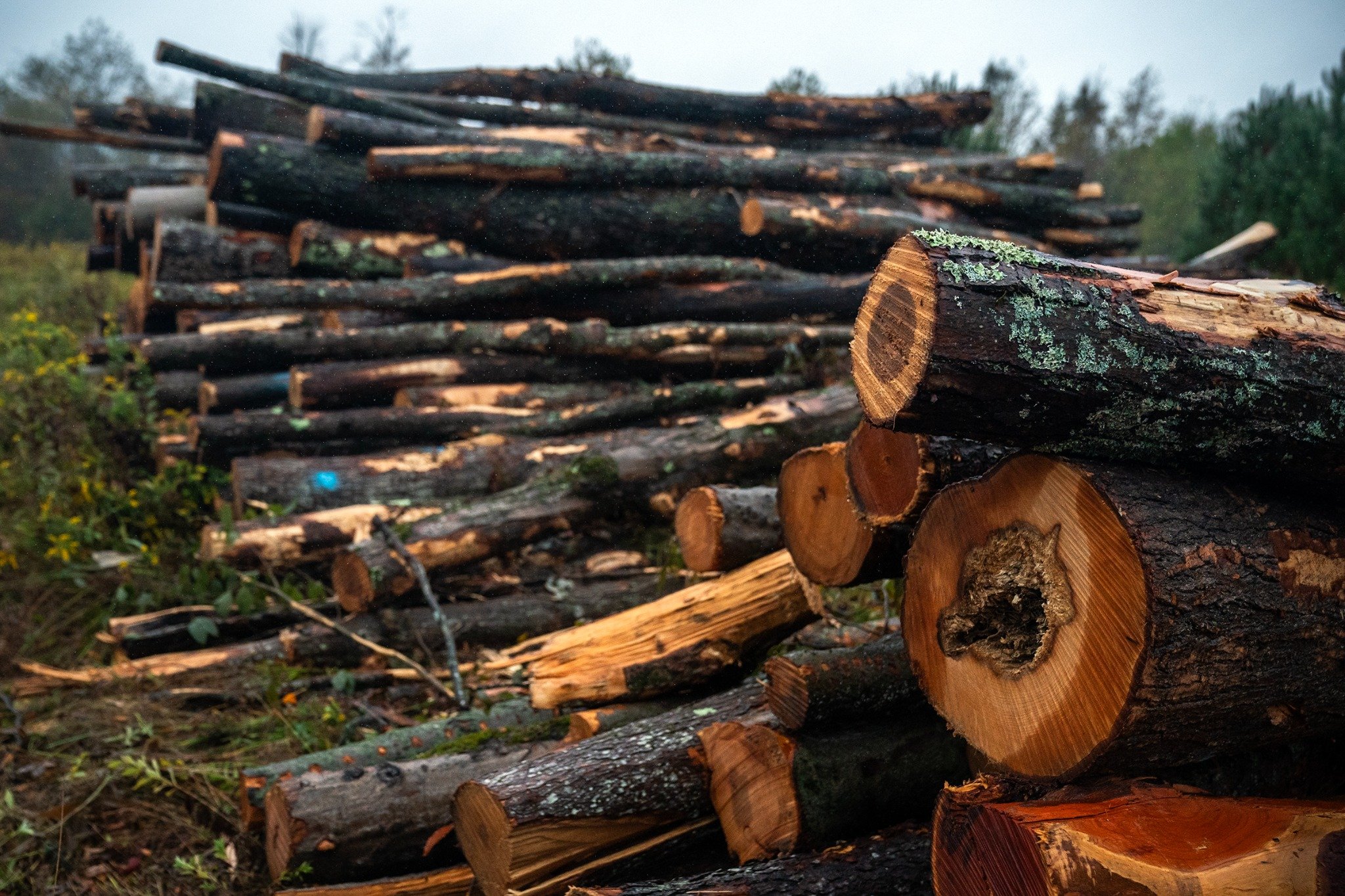
Soon, the forest can expect to see more activity. As logging expands in the Allegheny National Forest amid a federal push for more timber, the effects could be felt for years to come — in the forest and beyond.
A national push for logging
This fiscal year, the state’s only national forest is set to sell 45 million board feet of timber, said Alisen Downs, public affairs specialist for the Allegheny National Forest. That represents more than a 12% increase from the past fiscal year. The federal government’s fiscal year began Oct. 1.
It’s the first step toward meeting a goal set by President Donald Trump earlier this year: a 25% national increase in timber production throughout national forests.
A memo sent to regional foresters and deputy chiefs in April required the creation of five-year regional strategies to raise that national number. The Allegheny National Forest has proposed its own five-year plan beginning next fiscal year, Downs said.
That 25% national increase won’t necessarily equate to a 25% increase at each individual forest, but the Allegheny National Forest has room to do more. A forest plan created in 2007 outlines how the forest will be managed and caps timber sales at 54.1 million board feet per year.
The national forest could sell additional timber as long as the totals for the decade are not exceeded, Downs said.
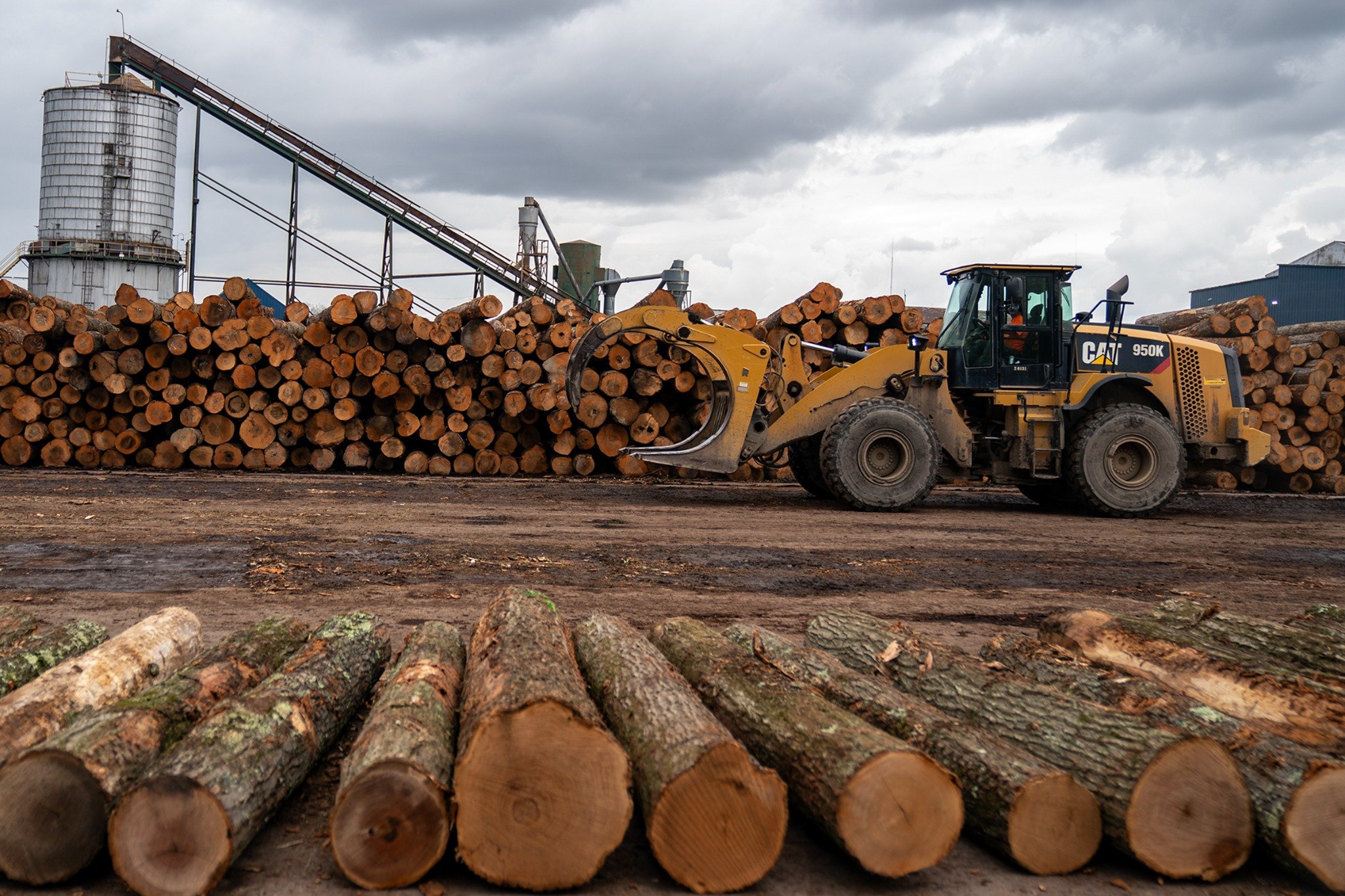
In April, nearly 60% of national forest lands were put under an emergency designation because of a high risk of wildfires and insect and disease infestations. That includes around 98% of the Allegheny National Forest, Downs said.
Some federally mandated regulations and processes — including one that allows challenges to logging proposals — are not required under the emergency designation.
For the Allegheny, wildfires pose less of a concern than other forests, said Josh Hanson, ecosystems staff officer for the Allegheny National Forest.
“Wildfire risk is lower in the East than out West due to our hardwood forests and humid climate, which helps to moderate fire risk and behavior,” Hanson said in an email statement. “From 2020 to 2024, the Allegheny National Forest averaged eight wildfires per year, with the average wildfire size of 11 acres.”
Threats to forest health
The Allegheny National Forest was founded in 1923, but much of the state was clearcut by the turn of the 20th century. That puts most of the oldest trees in the over 500,000-acre forest at around 120 years old.
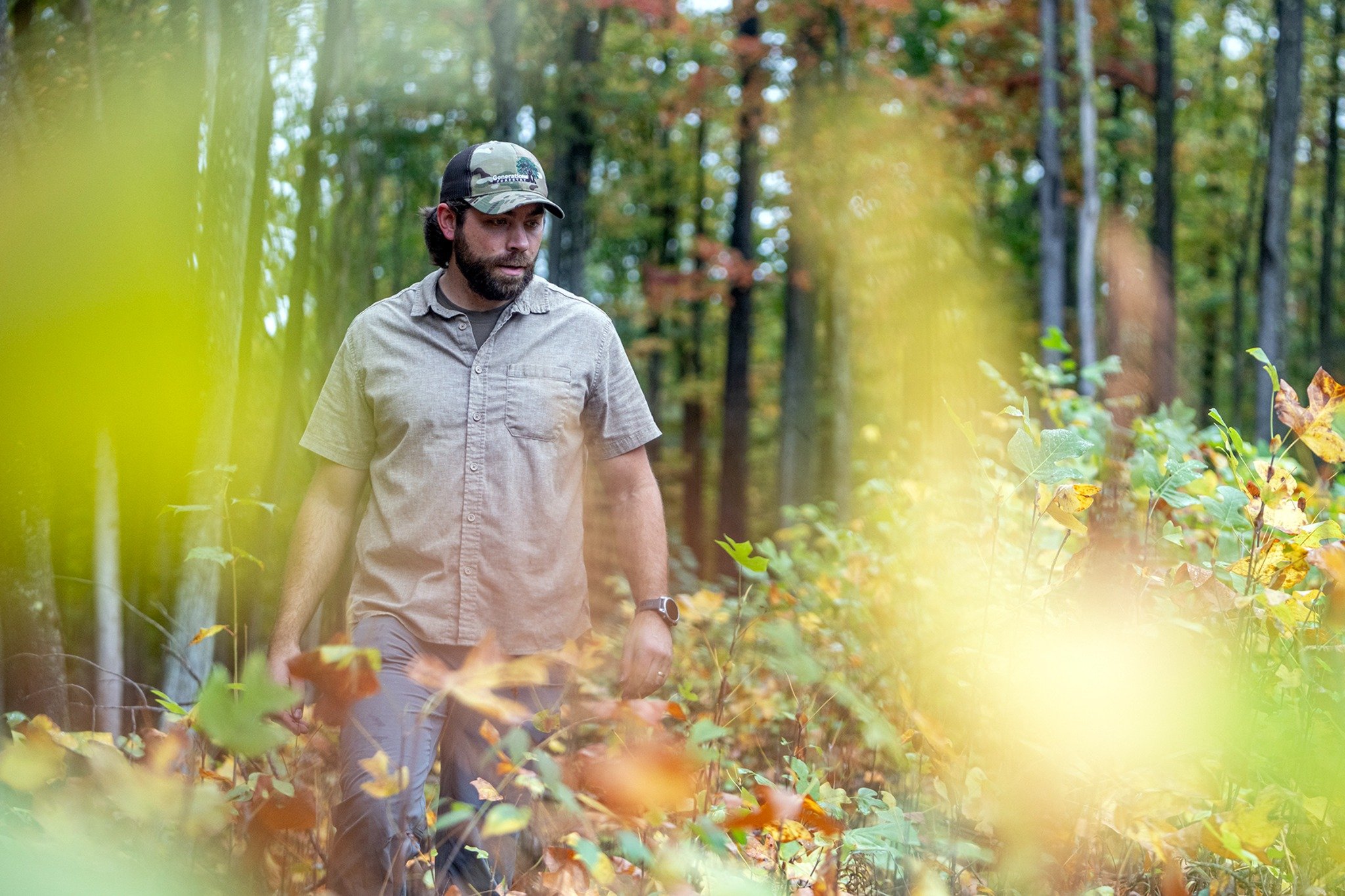
For some foresters, that rings alarm bells. The most common tree in herein the forest is black cherry, which reaches economic maturity around 80 years old and biological maturity at 100 years old, said Kenny Kane, a forester and president of Generations Forestry, a consulting firm that has worked in the national forest on timber sales and tree marking.
After biological maturity, cherry trees become considerably more susceptible to disease.
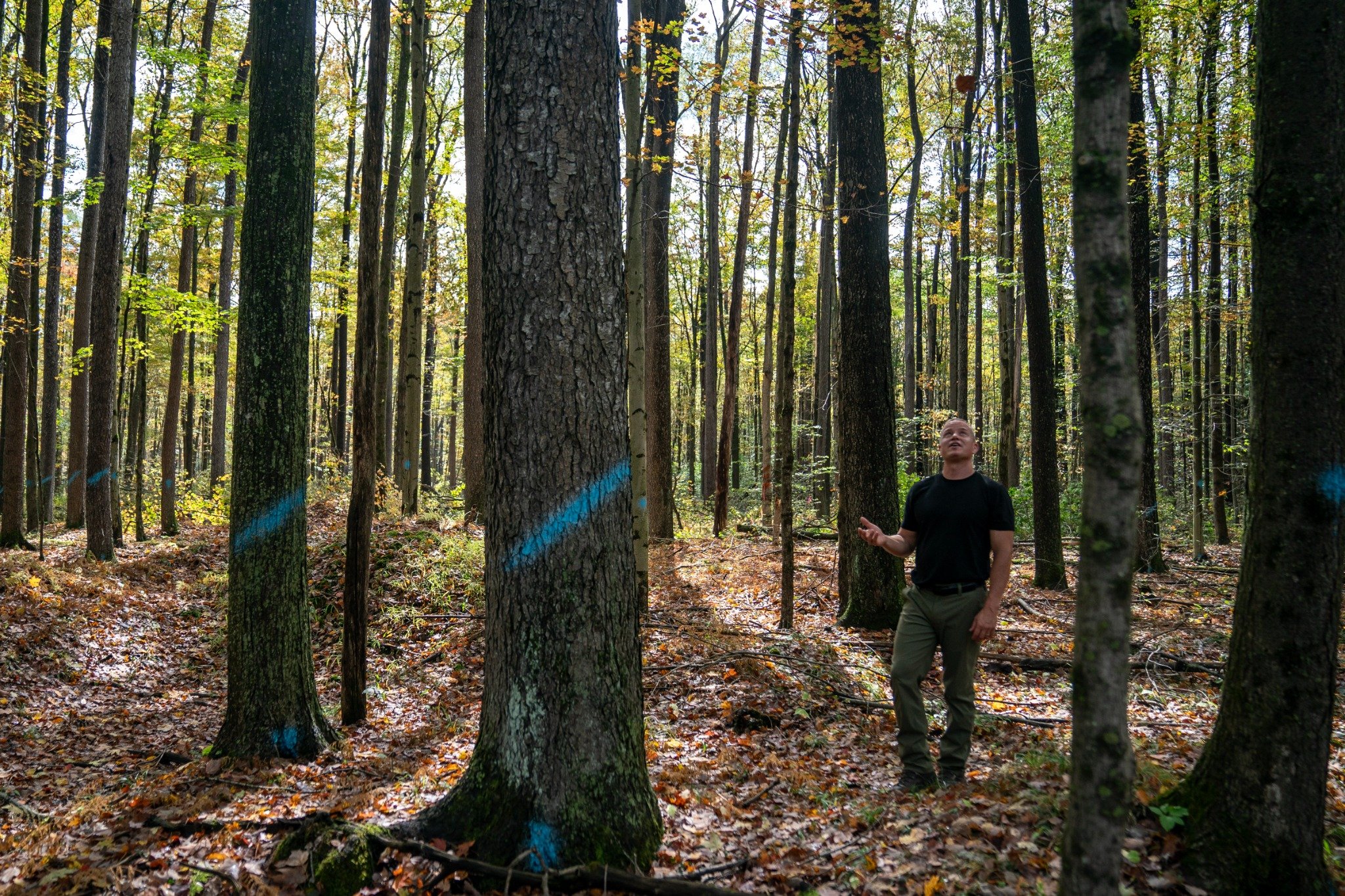
As John Saf, vice president of Generations Forestry, tours a logging site in the forest, he points to several dead or rotting cherry trees within eyesight of a logger’s equipment.
“The urgency is here because we’re at the extreme end of that spectrum of maturity, and the trees are falling apart,” Saf said. “If time passes and these things don’t get done, it’s looking bleak.”
He warned that wide swaths of the forest could decline in health or even die off if the forest isn’t well-managed — primarily through logging.
Matt Peters — a founding member of the Allegheny Defense Project and member of Heartwood, which advocates ending commercial logging on public land — argues that a disease outbreak is just a means of thinning out common black cherry trees.
“Of course, when you have a monoculture of black cherry, you're going to have diseases break out that thin it out, [and], naturally create gaps. Other things will naturally sprout if you leave it alone,” Peters said. “It's nature's healing processes that are needed here most, not management's repeated injury.”
But dead trees also play a role in forest health and biodiversity, said Will Harlan, southeast director for the Center for Biological Diversity and former editor for Blue Ridge Outdoors Magazine.
Old and dead trees also provide important habitat for many species, including federally endangered bats and the endangered hellbender salamander.
“Those are vital habitat for federally listed bats and a ton of other species that depend on old, decaying, rotted wood, as well as mature and old growth forests where we have so few of that left, especially here in the east,” he said. “Those are the forests we want to protect the most. So, would we kill our parents and grandparents just because they got older and replace them? No.”
Instead, the national forest should be a place that prioritizes mature trees, Harlan said.
Controversy over logging
Proponents and critics of logging rarely agree on the impacts of timber harvesting on wildfire risk, biological diversity, and pests and disease — broadly, whether it helps or hurts the forest.
The Allegheny is primarily a hardwood forest, and many of its dominant species are shade-intolerant. Foresters like Saf and Kane argue that cutting trees — particularly older trees that likely won’t last another decade — makes way for a healthy new generation of trees that can provide food and shelter for wildlife.
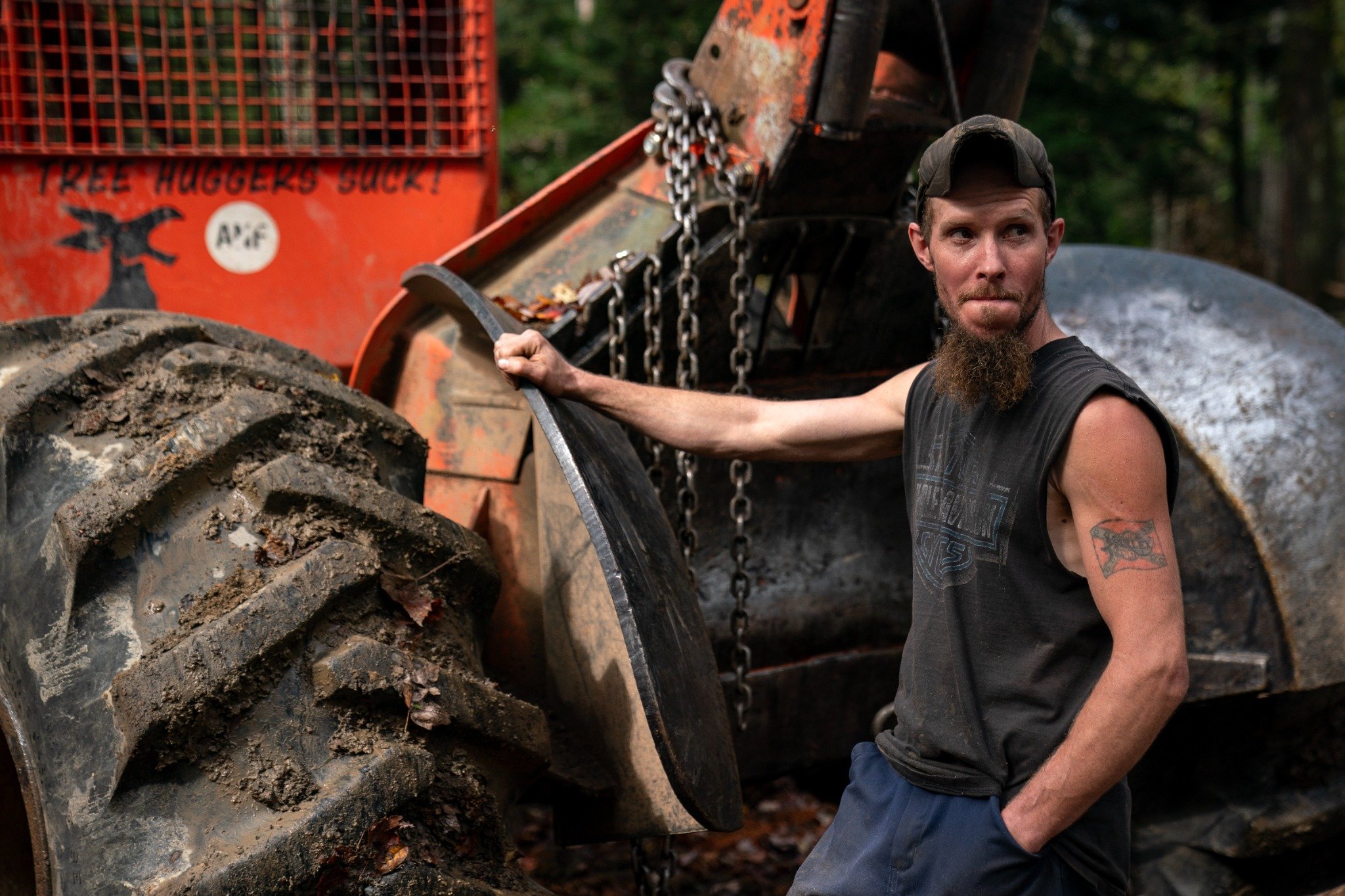
In the brush of an active logging job, Dan Albaugh pauses in front of his skidder to recount several times when his machine was tampered with by activists or forest visitors. A third-generation logger, Albaugh uses a 1984 skidder, a smaller machine his father once used.
The solitary nature of the job is part of what Albaugh likes about it. But he occasionally has run-ins with visitors who express distaste about logging in the forest.
“I get pissed off,” he said. “If they knew anything, it’s helping the forest.”

Around seven years ago, Albaugh said, his battery cables were cut while he was doing a logging job. His experience hints at the debate in national forests over the efficacy of forest management through logging. Environmentalists are frequent critics, and some even oppose logging in national forest lands altogether.
The Allegheny National Forest is no stranger to this debate. The divide is visible even on the back of Albaugh’s skidder, where a sticker reads, “Tree huggers suck!”
Abigail Hakas is a journalist based in Western Pennsylvania. This reporting was supported by a grant through a U.S. Local Reporting Grant through the Pulitzer Center.
Alexandra Wimley is a visual journalist and worked on this report as an independent project. She works for the Pittsburgh Post-Gazette and was a member of the 2019 Pulitzer Prize winning staff for breaking news for coverage of the massacre at the Tree of Life synagogue.
The Pittsburgh Media Partnership Newsroom is a regional news service under the Center for Media Innovation at Point Park University that focuses on government and enterprise reporting in southwestern Pennsylvania. Find out more information on foundation and corporate funders here.
Header image: A Murdock Forest Management employee operates a feller buncher, a harvester used in logging to cut and gather trees, on a tract of land in Elk State Forest in Warren County on Tuesday, Sept. 23, 2025. (Photo by Alexandra Wimley)